
Memory and Presidencies

As we near the 250th anniversary of the adoption of the Declaration of Independence, much discussion has been happening in online and offline forums around US history to this date, the legacy of the Founders, and what it all means for our nation moving forward.
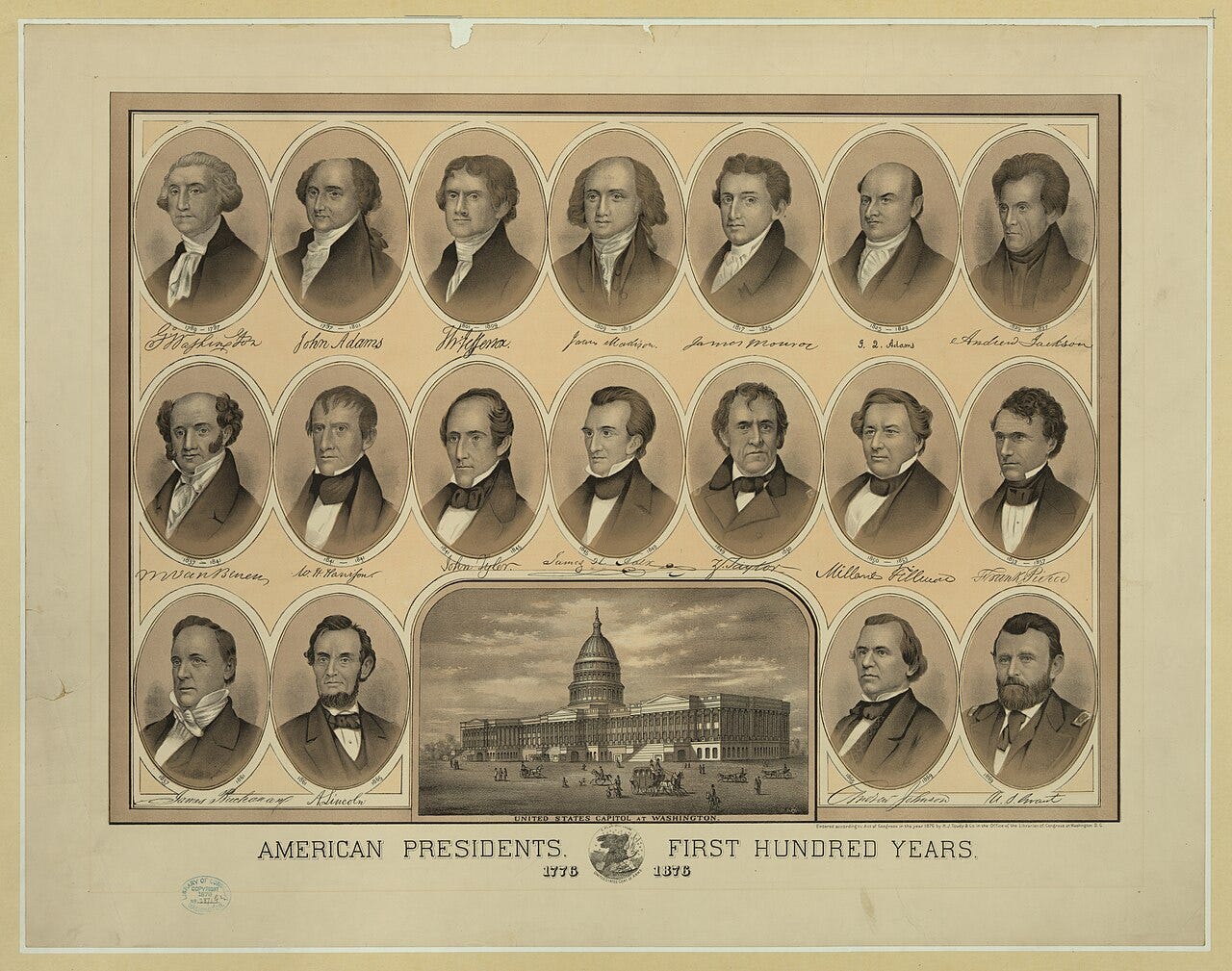
Legacy is something that is very much wrapped up in the history of the American presidency, even for the sitting president and their administration, starting with George Washington himself. Washington knew upon assuming the presidency that everything he said or did could potentially establish a precedent for his successors. He also knew that people in the future would judge him on the success or failure of his administration. I can only wonder if Washington ever could have imagined that future generations would actually take it upon ourselves to rank him and his successors.

Going Up and Down in the Charts
In 1948, historian Arthur Schlesinger Sr of Harvard University conducted a presidential ranking poll. Not surprisingly, the big three were (as they have by and large remained for most subsequent polls) Lincoln, Washington, and Franklin Roosevelt (Washington had some points where he dropped to 4th, which I imagine he would have been aghast at and taken offense).
While a number of presidents have remained consistent in the polls, there are others whose fortunes have risen or fallen as time has gone on. Andrew Jackson has fallen from top 10 in the 20th century to now being below his predecessor and opponent, John Quincy Adams, in the 2024 poll. Ulysses Grant meanwhile has gone from a low of 38 up to 17 with more recent reevaluations of the Reconstruction era (see my interview with Fergus Bordewich as an example).
Why does this happen? Typically one of two reasons: either we’ve discovered information that wasn’t readily available in the past and/or our approach to history has shifted. Keeping with the Grant example, for the longest, the focus in studies of his presidency was on the corruption in his administration. However, there was an underlying downplaying of the Grant administration’s achievements by historians influenced by the Lost Cause narrative. Once that bias was challenged, while not denying the corruption that was present around him, historians started to look at more of the whole picture, and Grant’s presidency came across in a different light.
Historical Champions
The legacies of some presidents have been helped by family members and close associates. John Hay and John Nicolay’s biography of Lincoln helped to shape his legacy (see my interview with Jan Cigliano Hartman to learn more). Jackie Kennedy gave us the term “Camelot” to describe the Kennedy White House in her efforts to ensure that her husband was remembered well. Especially for those who were left behind in the aftermath of an assassination or untimely demise, devotion to presidential legacy building is not unheard of.
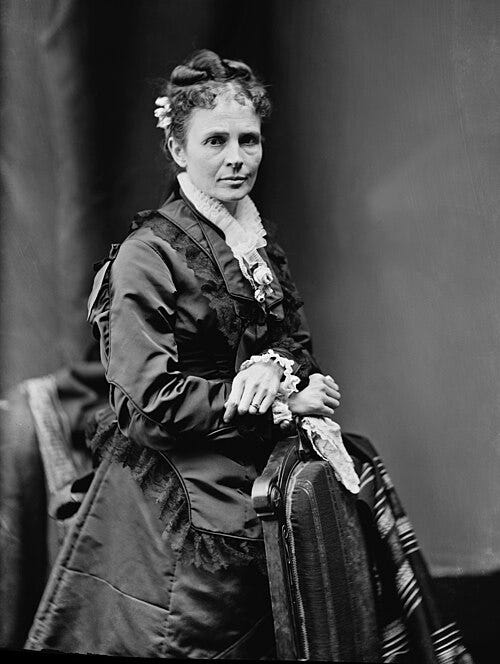

During his life, Lucretia Garfield was a devoted and erstwhile partner to her husband, James A Garfield, and after months of watching him languish after being shot in a train station, she was left as a widow. His passing however did not end her devotion to him. Instead, in 1885, she oversaw the construction of a library at their home in Mentor, OH to preserve her husband’s documents and books which she had been working to organize and preserve. In the process, she created the first presidential library, something that has become a standard for subsequent presidents in the 20th and 21st centuries.
It’s Not Over Till It’s Over (or Is It?)
.jpg)
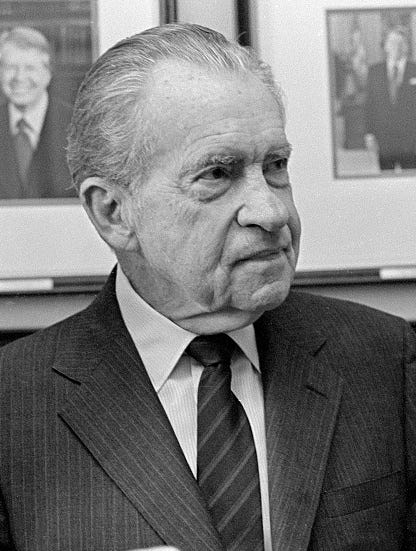
Richard Nixon was on track for at the very least an above average historical legacy if not inching even higher. He won reelection in an Electoral College landslide and with 60.7 percent of the popular vote, a new phase of US relations with China had begun under his watch, the SALT I treaty with the Soviet Union was a big step towards strategic nuclear disarmament - sure, there was still more to do, but he had made some big strides.
Then came all of the scandals - Nixon’s VP resigned in disgrace, more and more was uncovered about Watergate, the tapes started getting released, and that’s all she wrote. After his resignation, Nixon tried to do some damage control with his interview with David Frost, and he would find himself in conversations regarding policy with numerous of his successors as he assumed an elder statesman role. Though the best he can hope for at this point is the upper part of the middle of the pack (and he rarely even gets there when another ranking poll comes out), the fact that he’s not any further down is in no small part due to his efforts in his post-presidency to reshape his legacy, which as other presidents can attest does not always work.
As time goes on and more people take up the role of chief executive, we will have more opportunities to evaluate, and more work will be done to shape and reshape legacies. Though the work of history is never ending, it is powerful work to better understand those who came before us and sometimes even to understand the time that we’re in even better. May the knowledge that we’ve gained in the last 250 years help us to make the next 250 even better for future generations.
Latest Episodes
With the latest episodes, we’re diving deeper into the Monroe presidency with an in-depth look at his family while in my latest interview, my guest shares with me his research into a more recent president, George H W Bush. These have been great episodes to work on, so if you haven’t already, be sure to check them out!
Monroe Presidency Series
Interview Episodes
June Birthdays
We have three Cabinet members and a Vice President celebrating their birthdays this month, and in a rare occurrence, two of our birthdays fall on the same day!
June 9: Samuel L Southard (1787)
June 10: William Eustis (1753)
June 21: Alexander J Dallas (1759)
June 21: Daniel D Tompkins (1774)
And finally…
The Presidencies crew is going on vacation next week and traveling to see some of the homes of some of the Virginia dynasty presidents. If you don’t already, you may want to follow me on social media to see some of the pictures from our travels.
Likewise, if you’ve got some presidential history travels that you’re doing this summer, I’d love to hear about them! Feel free to share in the comments, on social media, or through DM.
If you’re going to the DC area this summer, I know friend of the podcast Kurt Deion with the Congressional Cemetery would love to have you visit to see the congressional members, Supreme Court justices, vice president, and more who are permanent residents at the cemetery.
Thank you to all of you for reading and for being on this journey through US presidential history with me!
If you’d like to support the podcast, there are numerous ways to do so including becoming a paid Substack subscriber as well as through Patreon and Buy Me a Coffee. You can also fulfill requests from my book wish list in order to ensure that my research is as comprehensive as possible. To all who have shown their support thus far over the years, I cannot thank you enough!
Leaving a rating and review is also a great way to show your support, and thanks to all who have taken a minute to do so!
Please feel free to reach out to me via email at presidenciespodcast@gmail.com or connecting on the various social media outlets Presidencies can be found on.
Until next time, stay safe and healthy, be kind to one another, and take care, dear friends!